Scanning a (literal) trashcan roll of photographic film
Today I’m going to tell you a short story of a negative I found near a trashcan a while ago.
Yes, seriously. I still don’t know how this happened and why would anyone throw film away but here we are.
The negative itself
Let’s start with the main character here – the negative. After I found it and did a quick field inspection, it turned out to definitely contain images and be somewhat damaged. It later turned out the damage was mostly local and not too bad.
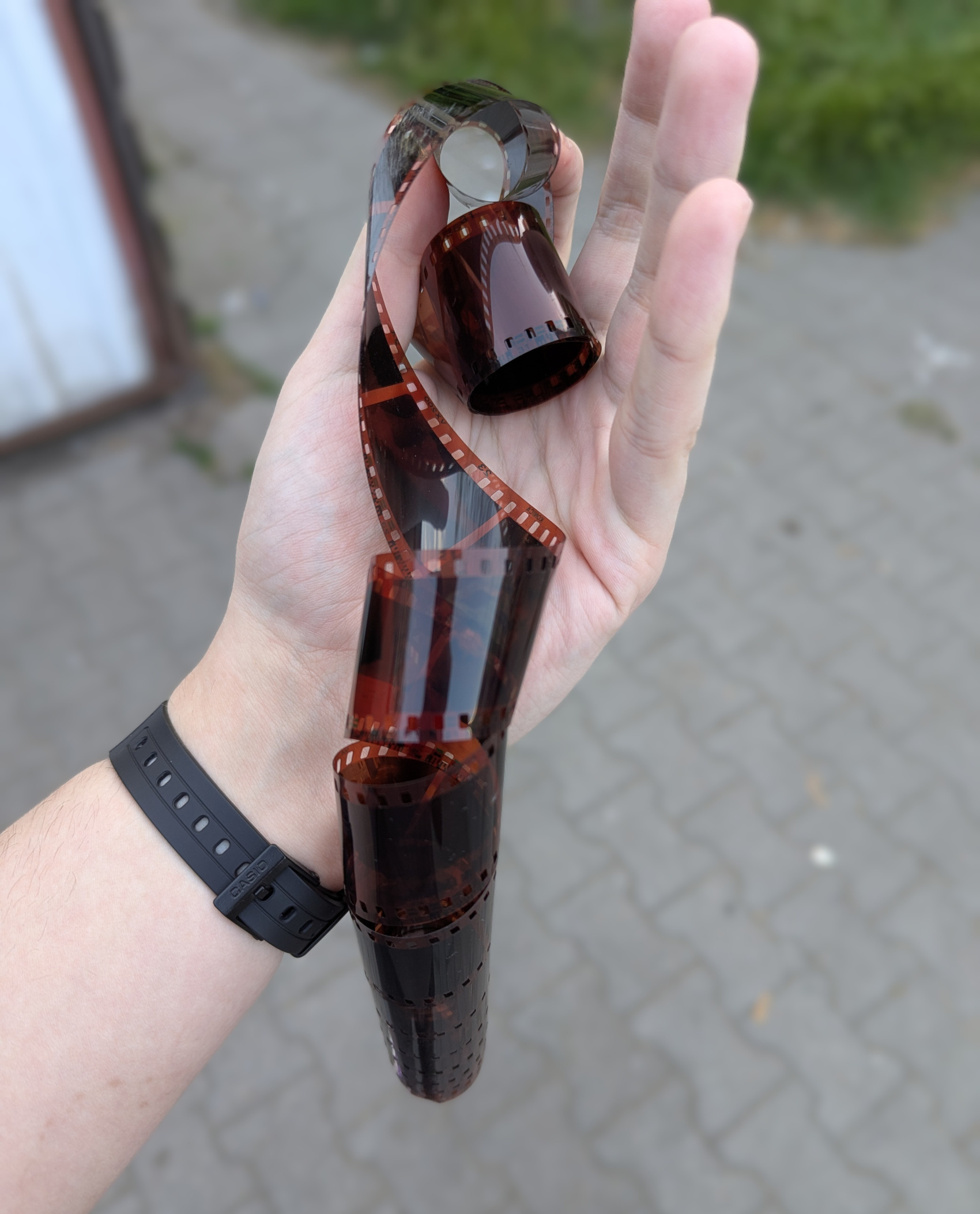
The obvious next step was to investigate it further, clean it and attempt to retrieve images from it.
It turns out the film used was Konica VX200, a color film that was manufactured until 2007 as far as I know. This fact was the first hint that the negative is old but let’s not get ahead of ourselves.
Concentrated isopropyl alcohol did just fine cleaning the negative, but that was the end of obvious solutions. My only option to get images out of it in home environment was DSLR scanning, a procedure that is effectively taking a photo of the frame on the negative with a digital camera and processing it digitally from there.
Properly executed DSLR scanning is about the cheaper and most accessible way of scanning film at home (dedicated drum scanners for photographic film tend to be very expensive), but it still requires some hardware. Mostly a good quality backlight and a bracket to hold the film in place.
Sadly, I don’t have any of those things, so I had to improvise with what I had on hand.
The (stupid) method
Due to a lack of either a backlight or a bracket, I decided to go at it redneck style and use whatever I had, knowing full well the tools will be suboptimal, and the results won’t be nearly as good as they could’ve been with proper equipment. But given the way I got the negative to begin with and the potential to have fun, sure, let’s go.
My trusty Pixel 7 phone set to max brightness with HDR took the role of backlight – a solution that works just fine except for one tiny issue. You can see the LED matrix in every image, making it basically impossible to get all the detail from the image. Effective resolution goes down a lot.
And instead of a bracket, I grabbed two hex keys and put them at the edges of the frame 👍️
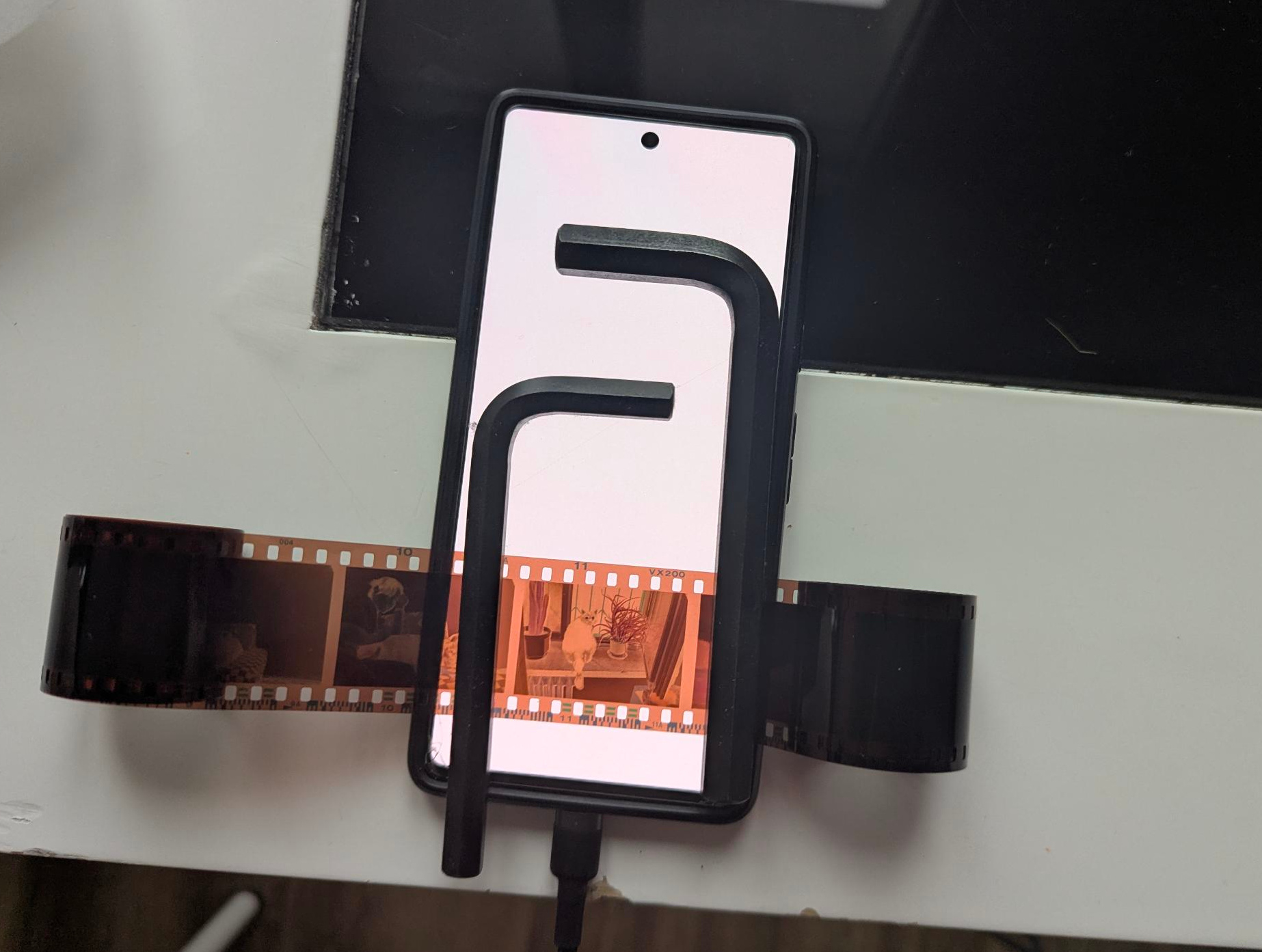
With that setup ready, it’s time to grab a camera and get to “scanning”!
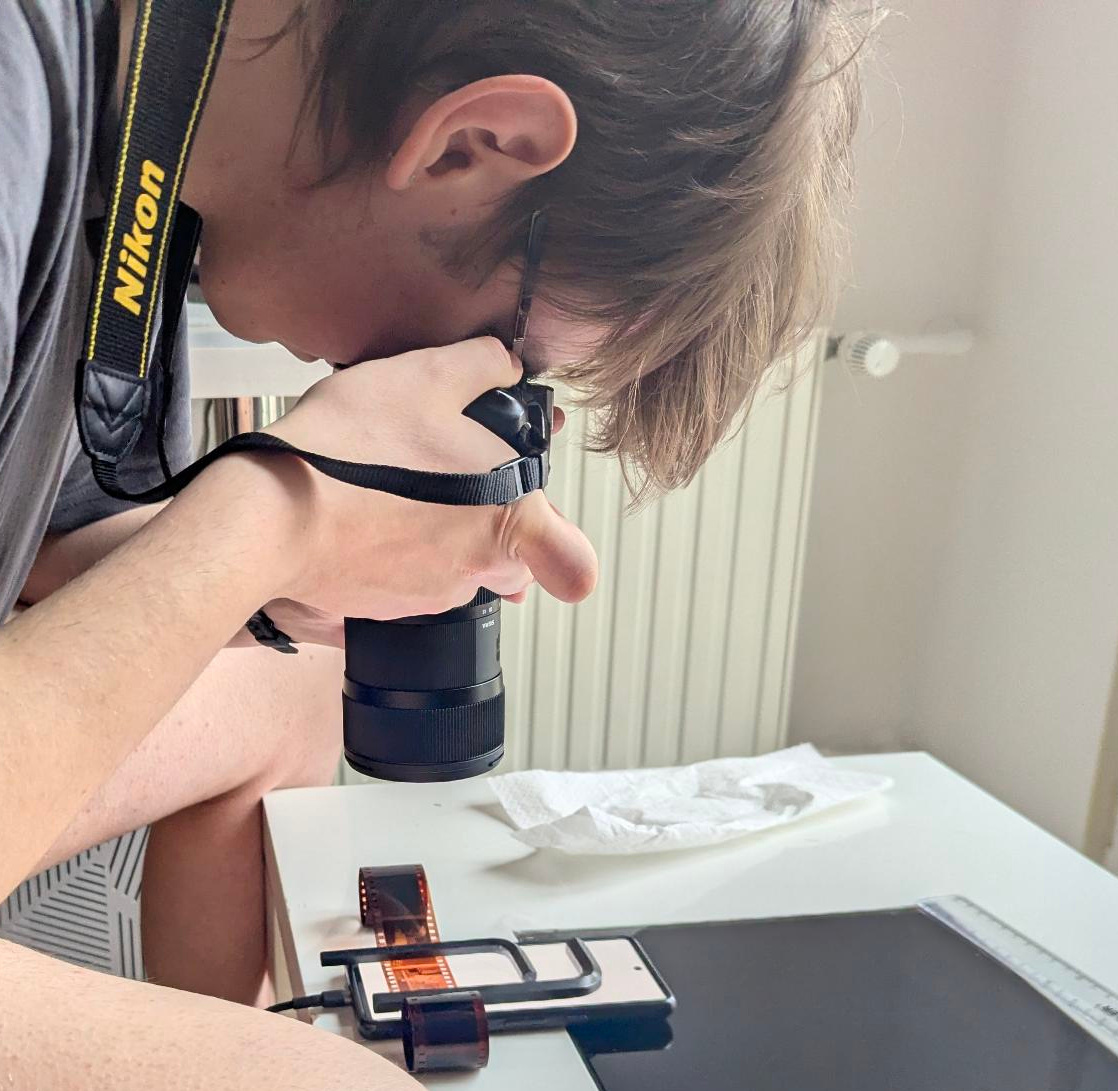
I used my Nikon D3200 with a Sigma 18-35mm f/1.8 AF lens. It’s not a micro lens, another less-than-ideal thing in this setup, but it was able to focus just close enough to make it work with some fair bit of cropping later in editing.
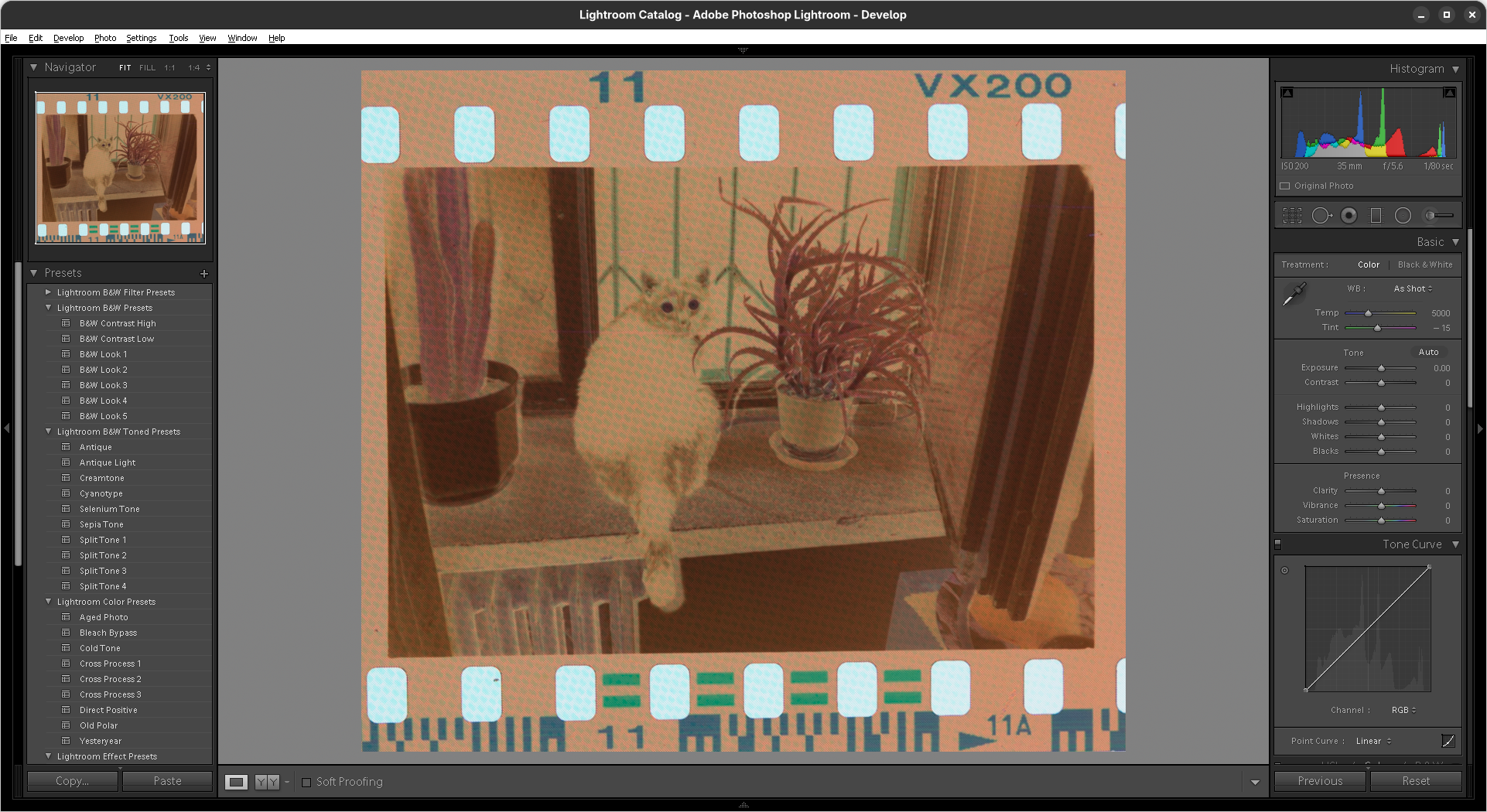
Once all frames were individually photographed, I got to work. My RAW editing software of choice is Adobe Lightroom, 2015 version ran through Wine on Linux. That’s a whole other topic I should probably write about, but alas.
It was only during this project when I realized working with the RGB levels curve is very annoying and buggy in this setup, so I decided to split the editing procedure into two steps:
- Lightroom: Crop, perspective correction and other RAW-level small fixes to the photos
- GIMP: Inverting and color-correcting exported JPEG files
The second step turned out to be actually surprisingly simple and quick. As it happens, GIMP is very competent at doing exactly this task without any complicated procedures. Inverting color channels is as simple as clicking one menu option, and the buil-in automatic color equalization tool was plenty good enough for the purpose of this project.
The end results were definitely much better than I expected when starting this project!
The result and findings
Now I want to take a moment to talk about the final results and findings about the content of the roll once I was able to take a proper look at it.
Let’s start by addressing something that some of you may think – no, there are no nudes on that film. There is nothing spicy or inappropriate. Actually, looking at the photos, it feels like someone’s early adventures with photography.
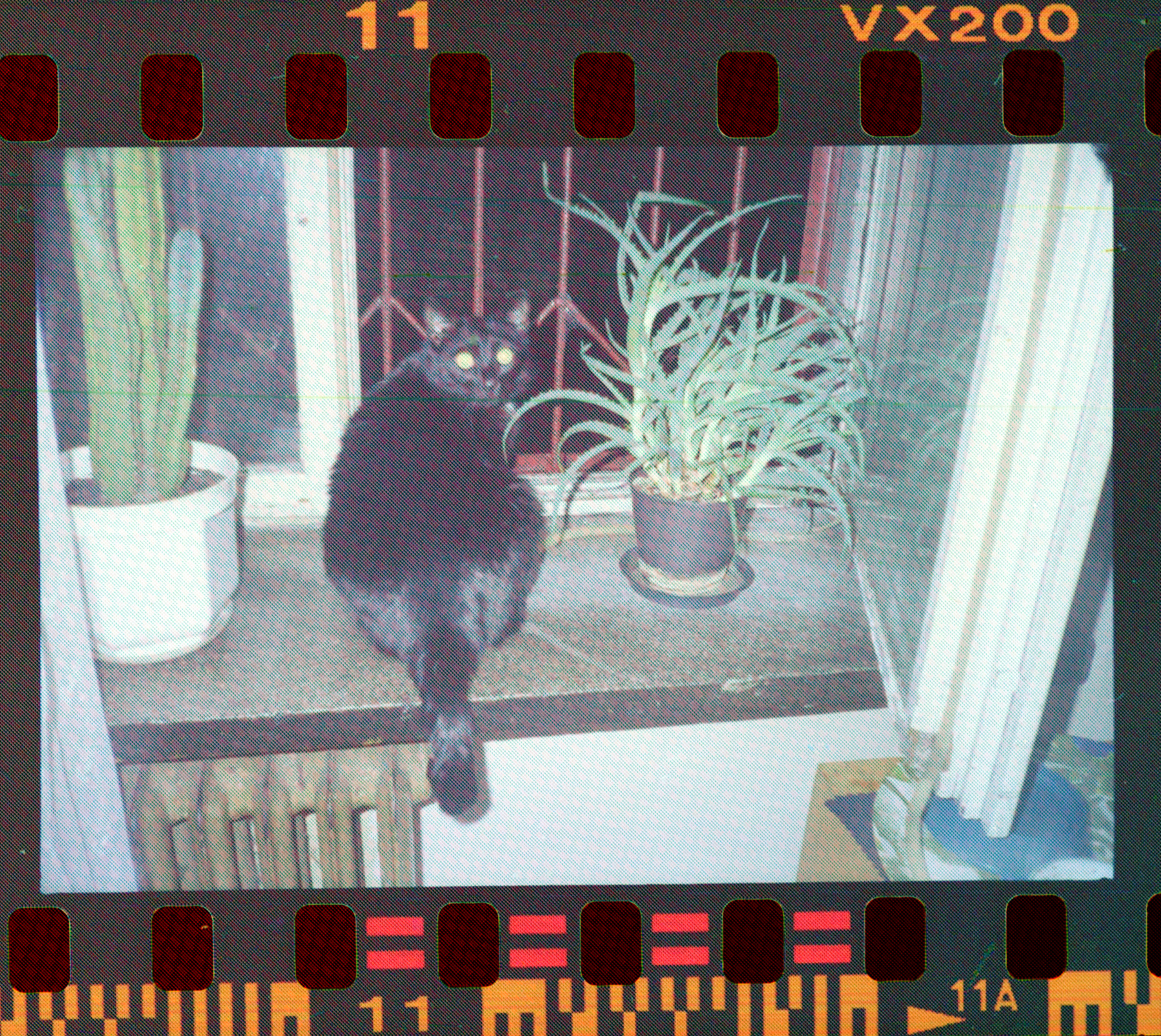
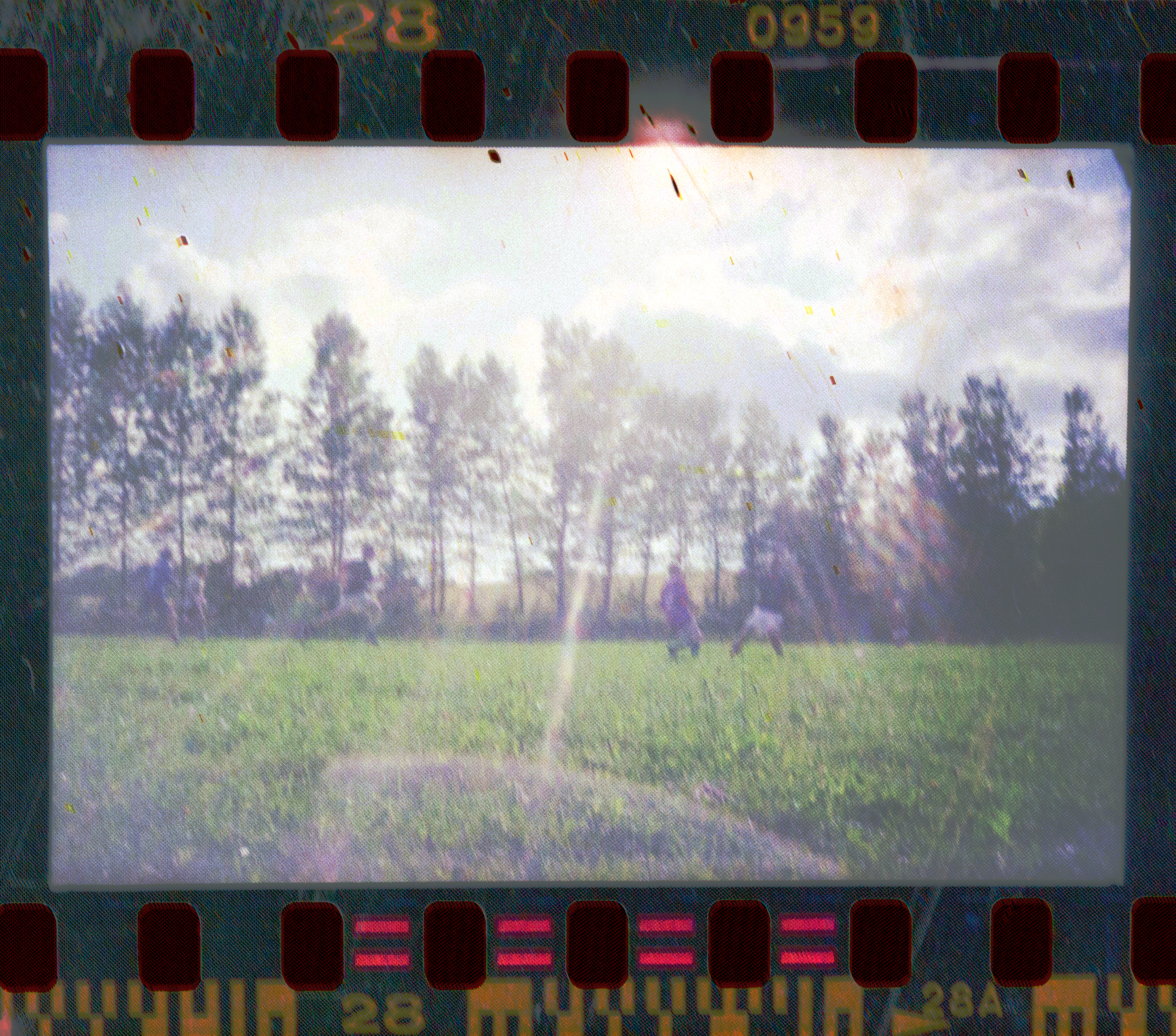
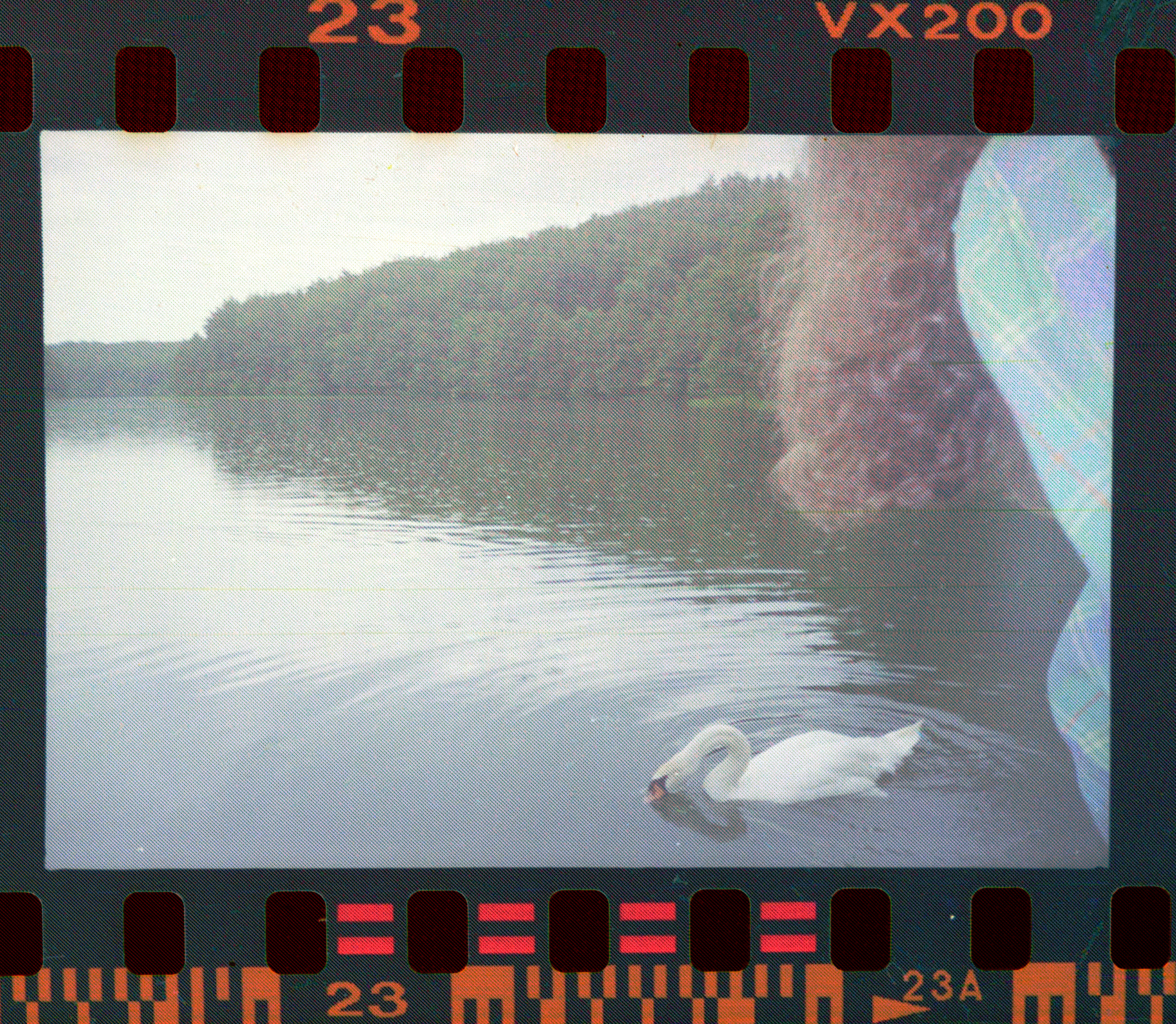
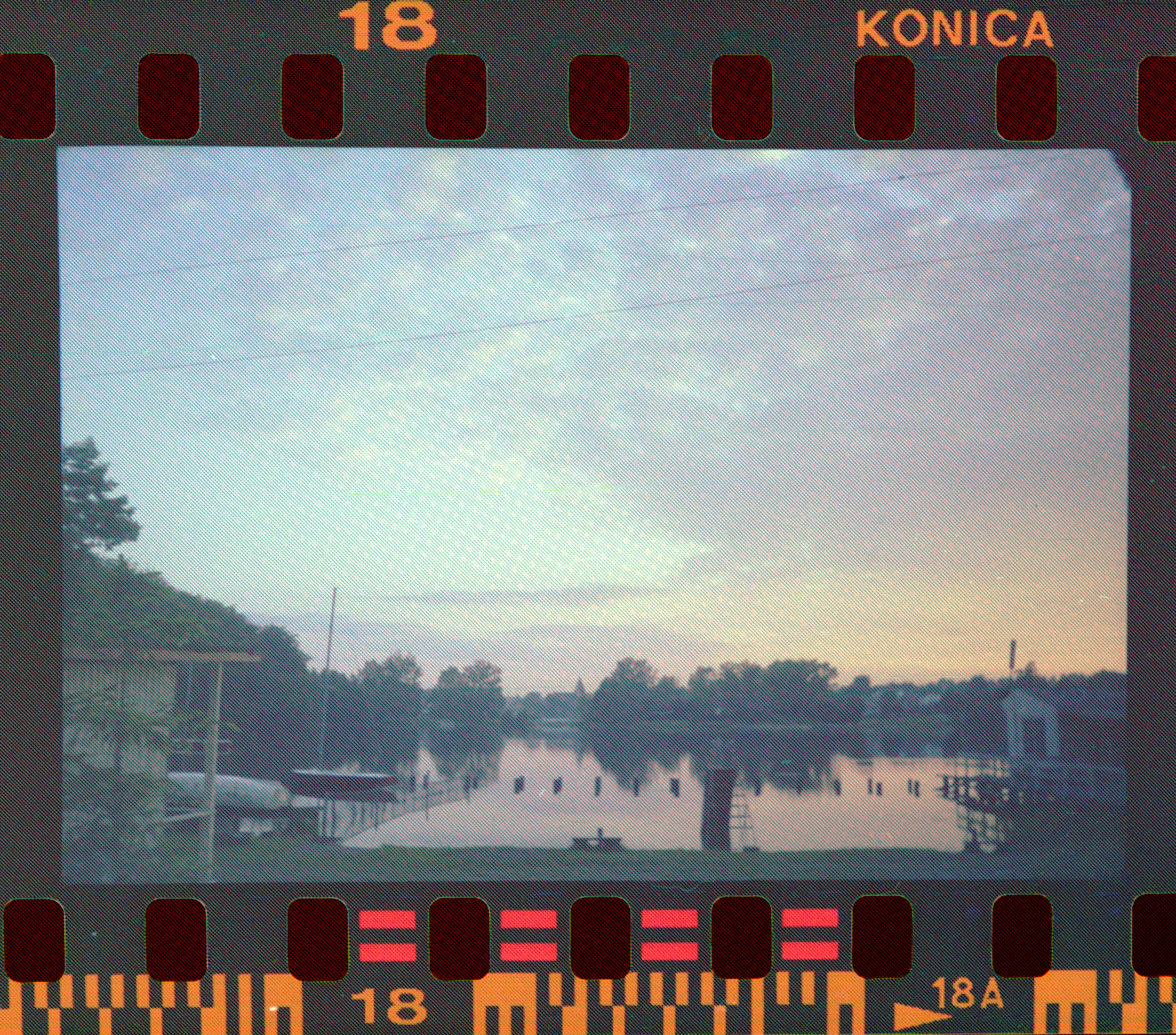
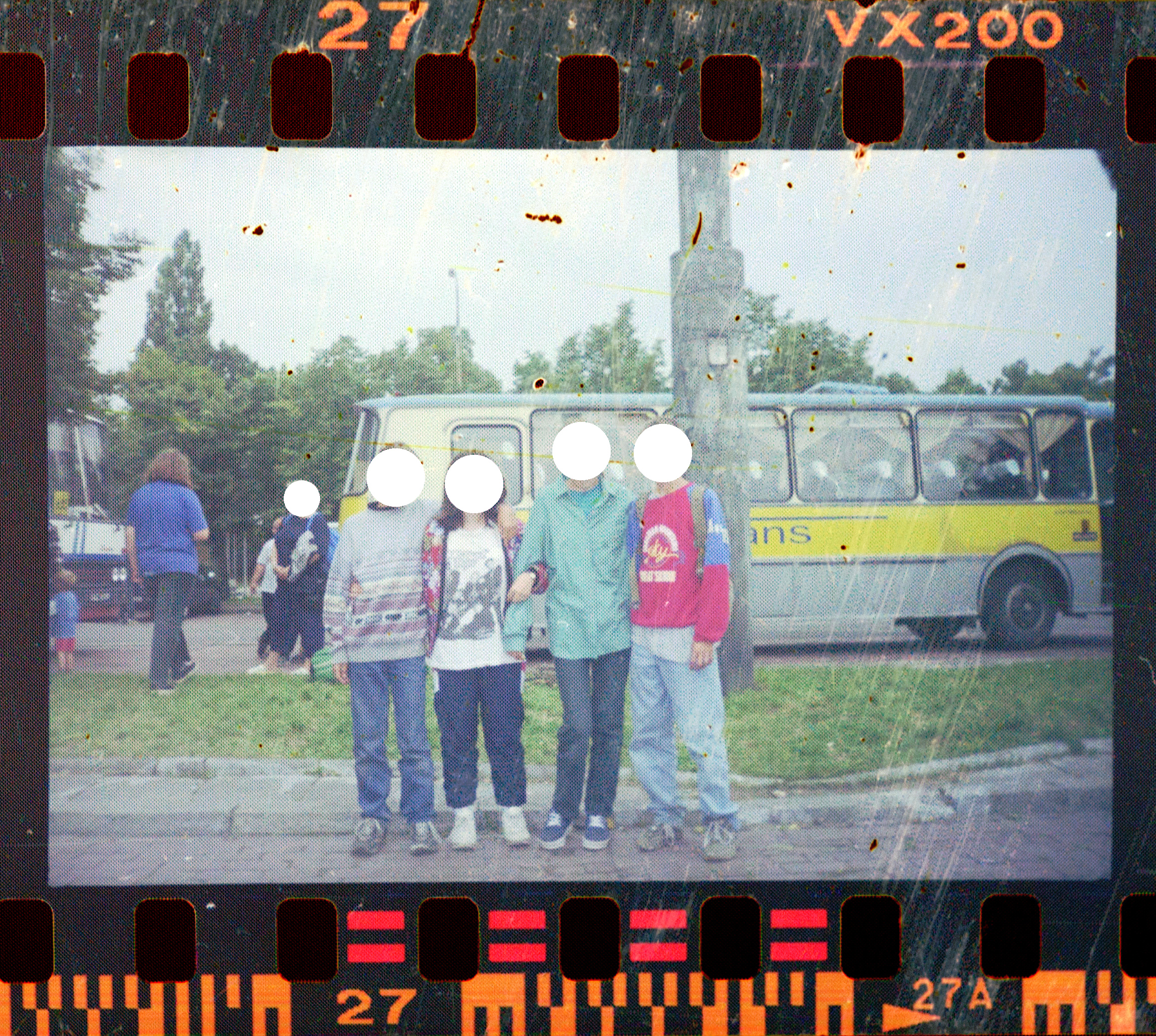
Images include photos people, house pets, architecture and (I think) some documentary of a trip, school trip it looks like.
An interesting part of this is also that judging by the way people are clothed, the design of interiors and a very old-school bus in one of the photos, I think these pictures were taken around 1990s or early 2000s – old stuff.
I was able to recover 33 frames out of the roll. The rest was either underexposed to a point of being unrecoverable or just blank.
Actually, the way there are blank spaces in the middle of the film makes me think the camera used might’ve been one of the Zenit Soviet-made SLRs. The one I own (Zenit TTL) can sometimes get “stuck” in a way that allows film to be advanced without shots being taken. I had that exact issue before.
Either way, I found the experience of working on this negative quite fascinating.
There is a feeling of uncovering a mystery, and ultimately working with photos that were taken by a stranger, capturing moments they spent with family or friends is oddly intimate, like entering that person’s life and observing it with a degree of insight that wouldn’t be possible any other way.
That ultimately is the reason why I won’t share most of what I found, but I am going to include a few photos just to give you a taste of what I discovered.
And one last thing that I got out of this adventure is an even stronger desire to get the hardware and do proper DSLR scanning of my own film in the future, heh.
Cheers!